Nearly 70 Percent of Homeowners Upgrade Fireplaces for Energy Efficiency Arlington, VA – November 14, 2008: With energy costs on the forefront of everyone’s mind, it’s clear why 69 percent of Americans that install a new technology fireplace, stove or insert do so to be more energy efficient. This is according to the 2008 Hearth Consumer Survey by the Hearth, Patio & Barbecue Association (HPBA). And, beginning January 2009, homeowners also can take advantage of a $300 tax credit to purchase a new pellet or 75 percent efficient wood stove.
HPBA’s recent survey also found that 51 percent of consumers look to hearth products to help save on heating costs. This may help account for the remarkable increases of hearth product shipments for the first six months of 2008. As compared to the same period in 2007, shipments of wood stoves/inserts increased 54 percent and pellet stoves/inserts increased 212 percent.
Top Five Heating Tips for Homeowners
Be Cautious of Old Stoves and Improper Installation: U.S. hearth dealers report that some homeowners are installing second-hand, less efficient uncertified stoves as a way to save money. But older, uncertified stoves can cause unhealthy indoor air pollution and can release 15 to 30 grams of smoke per hour, leading to creosote buildup that can cause chimney fires (compared to new EPA-certified stoves that produce only 2 to 5 grams per hour). And, old stove use, combined with improper installation near combustibles and without proper ventilation, may result in a home fire, rendering a home ineligible for insurance coverage.
Calculate the Savings: Those upgrading to an EPA-certified wood stove found wood use cut by a third. But the savings aren’t all in the stoves, as today’s fireplaces and inserts also offer higher efficiency ratings and cleaner burning technologies. HPBA developed a calculator (www.hpba.org/fuelcalculator) that estimates cost-saving benefits of all hearth products.
Ask for Cleaner and Greener Options: Consumers have more options than ever in fuel and product choices. To help navigate the myriad of product and fuel choices, efficiency and cost, HPBA has developed an online resource, Consumer Guide: The Easy and Efficient Way to Heat Your Home (www.hpba.org/HearthConsumerGuide).
Get in the Zone: Zone heating – using a fireplace, stove or insert to heat those rooms used most – allows the thermostat to be turned down on the central furnace, reducing fuel consumption and providing energy savings of up to 20-40 percent.*
Seek Out a Heating Expert: HPBA strongly recommends homeowners visit one of the nearly 1,900 member retail hearth product stores across North America when considering the purchase of a new fireplace, stove, insert or log set. Specialty retailers can help homeowners better understand the product differences, placement within a room and the best size that will help heat a home most cost-effectively and provide the installation by a technician certified by the National Fireplace Institute®.
HPBA’s referenced survey data is from the 2008 Fireplace and Freestanding Lifestyle, Usage and Attitude Survey
*ACEEE 1990 study on Energy Efficiency in Buildings. Proceedings. Volume 9.
About Hearth, Patio & Barbecue Association (HPBA)
The Hearth, Patio & Barbecue Association (HPBA), based in Arlington, VA, is the North American industry association for manufacturers, retailers, distributors, representatives, service firms and allied associates for all types of hearth, barbecue and patio appliances, fuels and accessories. Visit www.hpba.org.
NOVEMBER 7, 2008 – La Mirada, Calif. – Makita U.S.A., Inc., manufacturer of high quality industrial power tools and accessories and member of the Power Tool Institute (PTI), will adopt the new PTI Torque Procedure to measure torque in cordless drills, including driver-drills and hammer driver-drills in driver-drill mode. The new test method, agreed upon by all major power tool companies in the Power Tool Institute, is the industry’s first standard to measure torque in drills. Torque is one of the best means to measure the performance of cordless professional drills, a product used by pro tradesmen that accounts for a significant share of all power tool sales.
“Since Makita introduced and commercialized the cordless market nearly 30 years ago, there has been no single standard for measuring torque in cordless drills, and manufacturers have published figures derived from a range of different testing methodologies,” said Stan Rodrigues, Manager, Regulatory and Compliance Department at Makita. “A single standard with a consistent methodology will produce more accurate measurements for comparison, and is a true win for dealers and end-users of driver-drills.”
Prior to PTI’s new standard, power tool manufacturers conducted their own torque measurement in-house or with third party testing labs. The torque numbers were not useful for comparison since the testing hardware and methodologies were not standard. The PTI membership recognized this and worked together to create a new standard.
“Makita supports the new standard,” said Ken Hefley, Makita Senior Vice President, Marketing. “For tradesmen, torque is an important factor in the performance of a drill and a single standard guideline will produce consistent data so professional users can make informed purchasing decisions.”
“Makita is the first to publish torque numbers based on the new PTI Torque Procedure,” added Brad Wheeler, Senior Product Manager for Cordless Products. “Just as Makita is the innovation leader in the cordless category, we are the first to adopt this important standard.”
To learn more about the new PTI Torque Procedure, including the testing hardware and methodology, go to www.powertoolinstitute.com
About the Power Tool Institute (PTI) With the vision to unify and educate others about power tools, the Power Tool Institute (PTI) has established itself as the pre-eminent organization for building global understanding of power tools and for maintaining high standards of safety and quality control in the industry. Its members represent market-leading brands in the areas of portable and stationary power tools. From table saws and portable drills, from shapers to sanders, the Power Tool Institute’s members are committed to improving the industry and to being the premiere resource for power tool education. For more information, go to www.powertoolinstitute.com.
(TACOMA) - APA worked closely with allied industry groups to expand bracing options for builders using wood structural panels and produced the single largest increase in energy efficiency in code development history at the recently concluded International Code Council (ICC) Final <http://www.iccsafe.org/cs/codes> Action Hearings in Minneapolis. These results will appear in the 2009 ICC code books.
Major structural changes included the adoption of new length requirements for continuously sheathed brace wall lines greater than 10 feet tall. Previously, code did not specifically permit continuously sheathed walls greater than 10 feet tall. In addition, narrow braced wall segments can now be stacked in a building. Updates to the residential code were made to ensure the proper thickness and attachment schedules for wood structural panel sheathing were used on exterior walls in high wind regions. In addition, code officials approved an exemption that permits the use of wood poles as cell phone antennas up to 75 feet tall.
“Changes made by, or supported by, APA to the International family of codes removed numerous road blocks to the use of engineered wood building materials in modern construction, as well as providing the builders with a broad range of structurally competent solutions to common problems,” said APA’s Ed Keith, P.E., manager of codes and engineering. “Additional changes were added that provided further protections for the potential owner of homes constructed to the 2009 codes. APA <http://www.apawood.org/> attributes their accomplishments to a policy of consensus building with a broad range of industry organizations, consumer groups, builders, and building officials.
Energy Front “The Advanced Building Coalition (ABC) working with the Department of Energy and the Northwest Energy Group played a significant role in bringing about the single greatest increase in energy efficiency in both the Energy Conservation Code and the Residential Code, thus working to keep the residential energy and the energy conservation codes aligned,” said Mark Halverson, APA’s Eastern regional manager. “APA is proud to be a charter member of ABC. Another competing interest group, the Energy Efficient Codes Coalition (EECC), submitted changes in an attempt to encourage federal intervention into the process. ABC opposes bypassing the ICC consensus process through politics, which would be harmful to both the ICC and authority of local jurisdictions,” he added.
The most significant energy changes were related to duct testing, high efficiency lighting, air sealing, and window U-factors in the south central U.S. APA supported the ABC, which worked to pass cost-effective energy proposals while defeating an assortment of proposals submitted by EECC. Their “30% Solution,” which provided excessive energy code advantages for various insulation and glass products, was defeated along with another EECC proposal to remove the energy code completely from the International Residential Code (IRC).
ABC’s 30% Plus Vision platform supports additional increases in the two energy codes by 2012. These future code changes will add additional stringency to energy savings while also properly addressing life safety, cost-effectiveness, and flexibility in a usable code.
ABC is a broad group of building component manufacturers and other interested parties whose objective is to promote significantly increased building energy efficiency, sustainability, and other improvements in buildings. Contact ABCoalition@mac.com for more information.
Founded in 1933 and based in Tacoma, Wash., APA represents approximately 160 plywood, oriented strand board, glulam timber, wood I-joist, Rim Board and laminated veneer lumber mills throughout the U.S. and Canada. Its primary functions are quality auditing and testing, applied research, and market support and development.
“While the scents of suntan lotion, lemonade, and grilling may trigger sweet nostalgia, the mildewy, wet-basement “summer funk” found around the house after camping, a beach trip, or heavy rains is unforgettable.
For those of you who’ve ever been chided by a parent to “please hang it up,” below are some summer pointers on keeping your home smelling fresh, clean, and mold & mildew free:
· Smelly Sneaks’: To keep shoes from smelling after a hike or boat outing, place untreated charcoal in a plain-woven cotton bag, and then place inside the shoe. The charcoal will absorb the lingering odors. Replace as needed throughout the summer to avoid nature’s cologne!
· Outdoor Odors: For a quick post-camping fix to rid damp sleeping bags, towels, and clothes of their stench, try a cup of white vinegar added to the wash. This will neutralize and deodorize odors and loosen hidden dirt. Throw a sneaker in with items containing down feathers to prevent clumping. Also try SmellyWasher (www.smellywasher.com) is you’re looking to remove slimy, odor-causing buildup of detergents and fabric softeners hidden in your washer.
· Dank Dog-Days: August heat and humidity can worsen mold growth and odors. Sunshine, however, is the enemy of mold and mildew. Allowing damp items and pets to sun-dry will help kill these microorganisms. Try also Febreze Pet Odor Eliminator products, which are approved by the American Society of the Prevention of Cruelty to Animals – a complete pet-friendly collection for pooches and purrs.
· Storage Stench: Cover outdoor furniture when not in use with weatherproof covers and clean thoroughly before storing. Spray cushions, patio furniture, tents, and outdoor spaces with Moldex Disinfectant, a professional-grade, non-bleach mold and mildew remover. Use Moldex Protectant to form an invisible, mold resistant barrier against mold-spawning moisture (www.moldexbrands.com).
· Post-Beach Funk: Don’t let wet clothes stay wet. Hang towels and bathing suits out to dry and make sure clothes don’t sit in the washing machine — they tend to get moldy faster in the summer. To keep wet bathing suits and towels from smelling sour on the way home from a trip to the beach, place them in a large resealable plastic bag and sprinkle with a bit of baking soda.
· Basement Rank: Use an energy-saving dehumidifier in your basement, especially if it’s below-ground or contains your air-conditioning system which can increase moisture in the area. Energy Star qualified dehumidifiers use 10-20 percent less energy and can save consumers $20 per year – that’s $250 over the life of the unit.” Source: Moldex Brands
If you’re considering buying your first home, then take note. The feds are offering a tax credit (maximum $7,500) that works like an interest-free loan. It must be paid back over 15-year period, but can provide the help needed for many first-time buyers to make their home-ownership dreams come true. The credit is available for homes purchased on or after April 9, 2008 and before July 1, 2009.
READ MORE:
First-Time Home Buyer Tax Credit Website Draws More than 100,000 Visitors
WASHINGTON, Aug. 12 - A newly launched Web site, www.federalhousingtaxcredit.com, has attracted more than 100,000 visitors,
indicating that there is a strong interest among consumers to take advantage
of a temporary $7,500 tax credit for the purchase of a first home, according
to the National Association of Home Builders (NAHB).
“The initial response is encouraging,” said NAHB President Sandy Dunn, a
home builder from Point Pleasant, W.Va. “This could be the trigger that
helps move prospective first-time buyers off the fence and back into the
market. But it won’t last forever.”
The tax credit is among several provisions included in landmark housing
legislation enacted into law last month that will help get housing and the
economy back on their feet.
The Web site contains useful information on how the tax credit works,
including eligibility requirements. To date, the site has attracted 116,000
unique visitors, or about 10,000 per day. It includes details and questions
and answers on how home buyers can use the credit and is divided into four
sections:
- Tax Credit at a Glance. This provides a brief overview on how the credit
works.
- Frequently Asked Questions. A clear to read question and answer format
contains basic information about the tax credit, including the definition of
a first-time home buyer, what type of homes qualify for the tax credit, what
are the income limits to qualify, payback provisions and more.
- The Law’s Other Provisions. In addition to the tax credit, this section
summarizes a number of provisions in the Housing and Economic Recovery Act
of 2008 that will help prevent foreclosures, reinvigorate the housing market
and strengthen the nation’s economy.
- Home Buyer Resources. Provides online resources to make the buying process
smoother.
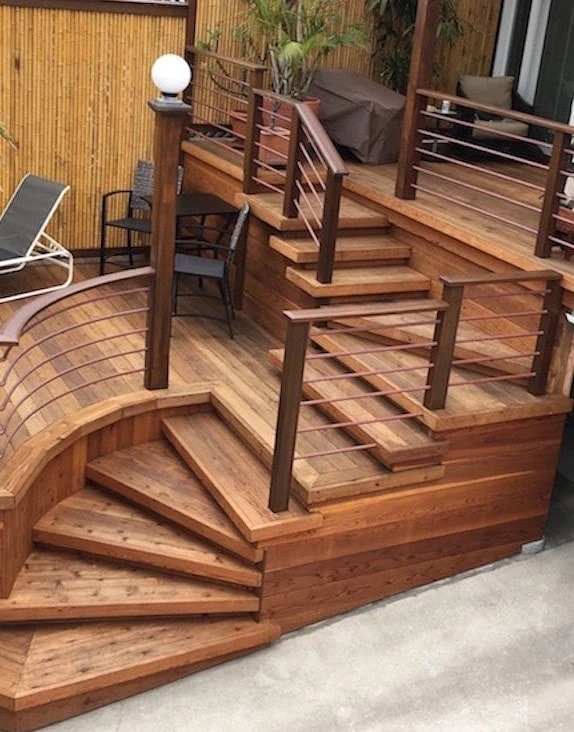
Includes decking and railing made at LP’s Meridian, Idaho plant and sold as WeatherBest®, Veranda® and ABTCo after Jan. 1, 2005
NASHVILLE, Tenn. (August 7, 2008) — Louisiana-Pacific Corporation (LP Building Products) (LP) (NYSE: LPX) today issued a product advisory for composite decking materials purchased after January 1, 2005, and made by LP at its Meridian, Idaho facility.
Some of the product can prematurely deteriorate and break, posing a risk of injury to consumers. LP decking products, including deck board and railings sold under the names of LP WeatherBest®, WeatherBest®, ABTCo and Veranda® are subject to this advisory.
The products are used for building outdoor decks. LP has received claims of premature deterioration of a small portion of its decking product due to variations in manufacturing processes in this time frame.
LP Executive Vice President of Specialty Products and Sales Rick Olszewski said, “We want consumers to be aware of the potential risk of injury, and to contact us. Though only a small portion of decking sold has been affected by these issues, we urge people who bought or installed these composite decking products after January 1, 2005 to contact us for an inspection through our decking notice Web site or customer service line.”
WeatherBest, ABTCo and Veranda are composite products that look similar to natural wood and are sold in several different colors, including Driftwood Grey, Pacific Cedar, Tuscan Walnut, Western Redwood, Chestnut and Greystone.
The affected products were sold after January 1, 2005 under the WeatherBest name at building products dealers nationwide, and under the Veranda and ABTCo brands at The Home Depot stores in the western part of the U.S.
Only those Veranda decking and railing products manufactured by LP are the subject of this advisory. WeatherBest products manufactured after LP’s sale of the Meridian plant in October 2007 are not affected.
What Consumers Should Do: Check Decks for Safety, Arrange for Inspection, Stay Off Decks with Deterioration
Consumers should check their Veranda, WeatherBest or ABTCo decking materials for visible cracks or deterioration on the surface, and/or chipping of the surface layers. If the deck or railing is deteriorating, do not use the deck. Contact LP Decking Customer Service to promptly arrange for an inspection of the deck.
Even if there is no visible sign of deterioration, if you purchased Veranda or WeatherBest decking or railing products after January 1, 2005, please visit the decking advisory Web site at www.deckingnotice.com or contact LP Decking Customer Service to register and determine if your deck is among the products affected. Veranda is produced by several manufacturers, but only product produced by LP is affected by this advisory. Visit www.deckingnotice.com or contact LP Decking Customer Service for help in determining which product you may have. To ensure deck owners’ safety, LP will arrange an inspection to determine if your deck is affected by the deterioration issue in this notice and will remedy the problem, up to replacement of the entire deck if needed.
Contacts
For more information, help identifying the products or to arrange an inspection, go to LP’s decking advisory Web site at www.deckingnotice.com or contact LP Decking Customer Service at 1.888.325.1184.Photo caption: Boards with premature deterioration may show flaking, cracking or other obvious signs of deterioration. If your deck is affected stop using the deck and contact LP at www.deckingnotice.com or through the toll-free customer service number, 1-888-325-1184.LP, headquartered in Nashville, Tenn., is a premier supplier of building products, manufacturing innovative, high-quality commodity and specialty products for its retail, wholesale, homebuilding and industrial customers. LP no longer manufactures decking or railing products. Visit LP’s Web site at www.lpcorp.com for additional information on the company.
Lafarge’s Buchanan Plant To Produce Environmentally-Friendly product Lafarge, North America’s largest diversified supplier of construction materials, and Mirant Corporation, a leading U.S.-based competitive energy company, today announced that they have signed a long-term agreement under which Mirant, beginning in 2010, will supply synthetic gypsum to Lafarge’s gypsum drywall manufacturing facility in Buchanan, New York.
Reflecting Lafarge’s long-standing commitment to producing “green” products, the company will invest in an upgrade of its Buchanan plant which will enable it to manufacture a full line of gypsum products using this environmentally-friendly material. The supply agreement will also ensure Lafarge’s continuing, cost-effective access to a critical raw material used in its building products. Upon scheduled completion in 2010, the gypsum board manufactured in this plant will exceed 99 percent recycled content by weight and qualify toward the attainment of LEED® credits in the construction of “Green Buildings” throughout the northeastern United States.
Lafarge is an industry leader in the use of synthetic gypsum. With the addition of the Buchanan plant, nearly all of the gypsum board manufactured by Lafarge in North America will be made with 100 percent recycled paper and recycled gypsum. Currently, Lafarge’s Silver Grove, Kentucky plant and Palatka, Florida plant qualify for this distinction.
“This is a major step in our evolution to be the industry leader in gypsum board and the number one supplier of ‘green’ building products,” said Ike Preston, President of Lafarge Gypsum in North America. “This upgrade will allow us to serve virtually all of our trading area with recycled product and assist our customers in meeting the requirements of LEED® certified construction.”
Mirant will transport the synthetic gypsum to Lafarge’s Buchanan facility from its Morgantown and Chalk Point electric generating stations in Maryland. Synthetic gypsum is a by-product created from the sulfur dioxide removal technology currently being constructed at Mirant’s Maryland power plants as part of the company’s $1.6 billion investment in air pollution control technologies. “Partnering with Lafarge allows Mirant to maximize the environmental benefit from the installation of these systems. The beneficial use of the synthetic gypsum eliminates the need for waste disposal of the by-product,” said Bob Driscoll, CEO, Mirant Mid-Atlantic, LLC.
Hand Tool Manufacturer Celebrates Football Season With Tool Giveaway
MEADVILLE, Pa. — July 24, 2008 — With football season right around the corner, Channellock Inc., a global leader in the design and manufacture of quality hand tools, is helping kick off this American tradition with the “CHANNELLOCK® Football Challenge” sweepstakes.
The sweepstakes, running for 22 consecutive weeks, begins August 4, 2008 and ends January 4, 2009. With a new contest every two weeks, football fans must re-enter every other week to have 11 chances to play and win one of 11 CHANNELLOCK® tool rolls. The five-piece tool rolls include a 10-inch tongue-and-groove plier, 6.5-inch tongue-and-groove plier, 7-inch diagonal cutting plier, 7-inch end cutter and an 8-inch long-nose plier with side cutter. To enter the sweepstakes, contestants must visit www.channellocksweepstakes.com.
Entering the sweepstakes is simple and fun. Contestants must first answer three football and Channellock-related trivia questions before they can be entered into a drawing to win one of the 11 CHANNELLOCK® tool rolls, the perfect addition to any DIYer’s toolbox. The approximate retail value of each prize is $100. Football fans can also test their knowledge against friends and family using the Web site’s buddy referral system.
“We received an overwhelming response from the ‘Red, White, and CHANNELLOCK® Blue’sweepstakes this past spring,” said Scott Jonap, vice president of sales and marketing for Channellock. “We’re excited to present a second sweepstakes opportunity, one that unites two great American traditions – football and Channellock hand tools.”
Harsh winter weather and inevitable spring storms wreak havoc on roofs, a home’s first line of defense against Mother Nature. Snow, driving rain, hail and even exposure to direct sunlight are hard on roofs. The National Roofing Contractors’ Association (NRCA) recommends that homeowners conduct seasonal roof inspections and be aware of their material options in case their roofs ever require repair or replacement. Following are tips from CertainTeed, a leader in the roofing industry, to help your readers keep a discerning eye on their biggest asset overhead:
*The NRCA says that each spring and fall, homeowners should clear debris from their gutters, check roof shingles for damage, inspect the areas around chimneys and pipes, and check walls and ceilings inside the home for water damage.
*Shingles that are buckled, curled, blistered or missing an excessive amount of granules are likely at the end of their lives. CertainTeed recommends homeowners avoid potential falls from the rooftop and use a pair of binoculars to inspect from the ground for missing, torn or worn shingles, or better yet, consult a professional roofing contractor.
*Heightened frequency of severe weather patterns has popularized weather-resistant roofing shingles. Several designer shingles and products by CertainTeed are available with wind warranty coverage up to 110 miles per hour (mph).
*Many shingles are now engineered for impact resistance and can withstand the impact of a 2-inch steel ball dropped from a height of 20 feet without cracking. Because of this durability, homeowners who have impact-resistant shingles installed may be eligible for insurance premium reductions depending on the location of their properties and their insurer. CertainTeed offers the most extensive selection of impact-resistant roofing products in the industry.
Bosch is growing….. here’s the Press Release as released by CST Berger:
“On June 11, 2008, the Bosch Group announced that it has entered into an agreement to acquire CST/berger from The Stanley Works portfolio. The parties expect to complete the transaction, which is subject to regulatory and other approvals, in the next few months.
The Bosch Group is a leading supplier of automotive and industrial technology, consumer goods and building technology with sales of $63.2 billion USD in fiscal year 2007 and over 271,000 employees worldwide.
The acquisition of CST/berger by Bosch Power Tools division will create a vibrant measuring tools business that will enable us to continue growing with innovative products to meet the needs of all our customers. The new ownership will provide a platform for significant brand expansion and a broader product portfolio.
As soon as the transaction is completed we will begin the process of combining the strength of the CST/berger and Bosch measuring tool programs. Both companies have a deep heritage and unyielding commitment to our customers, and we intend to continue delivering on that commitment through this transition.